What a 60-second timeout actually is
The clock says 60 seconds, but the usable talking time is closer to 30. The first half burns on the walk over, players finding water, the bench getting untangled from the crowd, and getting eyes on you in the first place — that's chaos, not waste, but it's real time you don't get back. What's left is one real chance to say something that changes the next four minutes. Plan for 30 seconds of talk, not 60, and you'll never be the coach still diagramming when the horn blows to send everyone back out.
The 3-things rule
In 30 seconds, a team can absorb three things — not five, not a full scouting report. One defensive fix. One offensive call. One situational reminder (score, fouls, clock, timeouts left — whatever matters right now). That's the entire huddle. Courtside AI's timeout mode is built around exactly this: when you call a timeout, it shows three cards — Offense, Defense, Situation — and nothing else, with a visible countdown that returns you to tracking automatically when the timeout ends. It's not a design choice for its own sake; it's a bet that three clear things beat ten muddled ones, every time.
A 30-second timeout is even tighter — barely enough time to get everyone's attention, let alone deliver all three. Use it for the single most urgent of the three, or just to stop the bleeding and reset without trying to coach much at all.
What not to do
Don't info-dump. A timeout is not the moment to review the whole game plan, relitigate a rotation, or stack four adjustments on top of each other — players retain the first thing you say and the last thing you say, and everything in between gets lost on the walk back. And don't spend any of the 30 seconds litigating the last call. The whistle already happened; arguing it in the huddle steals time from the two things that actually change the next possession, and it teaches your team that the ref is the story instead of the next play.
End-game timeouts are their own animal
Late-game timeouts carry one extra piece of situational awareness coaches forget under pressure: in high school, a timeout does not advance the ball. Unlike some levels of basketball, you don't get to move the inbound spot closer to your basket by calling time. If you're going the length of the floor, plan the actual full-court trip — who inbounds, who's the outlet, where the catch happens — not just the shot at the end of it. The situational card in timeout mode carries exactly this kind of reminder, because it's the detail that's obvious in hindsight and easy to forget live.
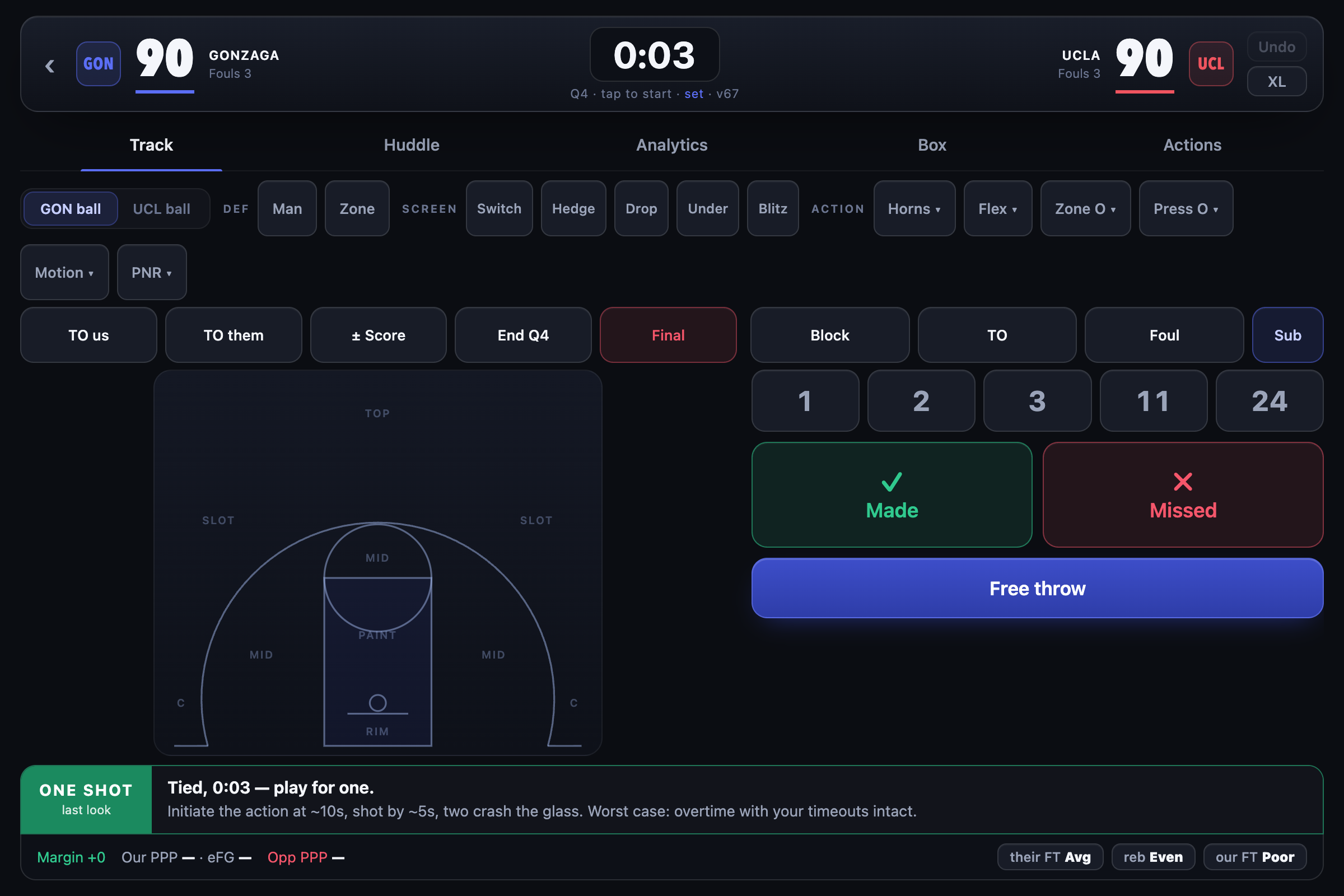
What Courtside AI's timeout mode actually shows
No hype here — it's three short cards and a clock, on purpose. Offense: the read on what's working right now, computed from tonight's tagged possessions. Defense: the coverage that's actually giving up points, not the one that feels like it is. Situation: bonus status, foul trouble, and the end-game read when it's late enough to matter. The countdown ticks down in the corner and sends you back to tracking the moment the timeout ends, so nobody's fumbling for the right screen while the ref's already waving players back onto the floor.