The short answer
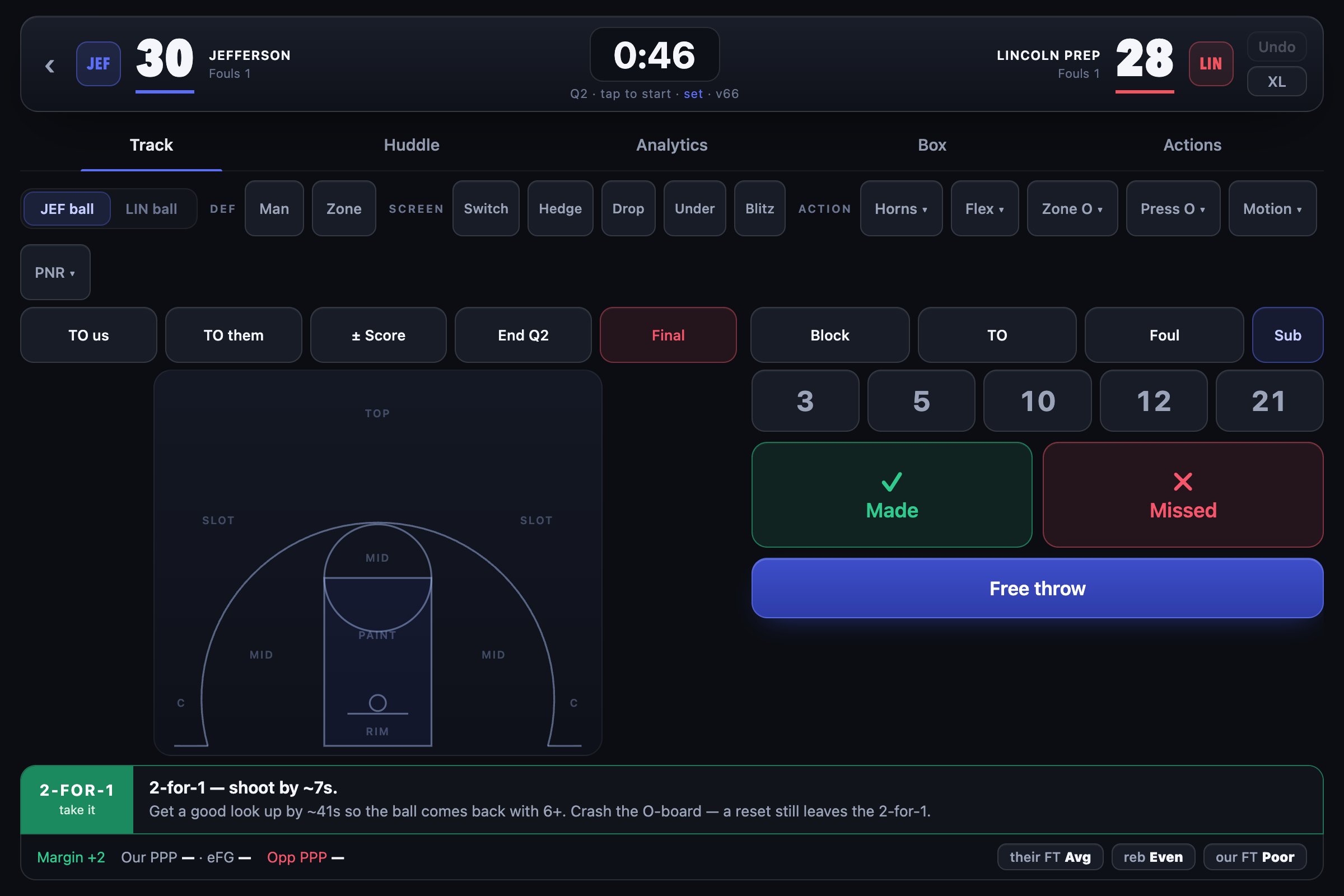
With a 35-second shot clock, the window is 41 to 52 seconds left on the game clock, ball in your hands. Get a good look up by about 41 seconds, and even in the worst realistic case — you score or they rebound cleanly — the ball comes back to you with 6 or more seconds left, enough for a real last shot instead of a scramble heave. Two possessions for you, one for them. That's the whole idea.
Why the math works
A shot clock caps how long the other team can hold the ball before they're forced into a shot. If you shoot early enough in your own possession that a full shot clock's worth of time still remains on the game clock, the other team physically cannot use the entire game clock themselves — they'll be forced to shoot (or you'll get a stop) with time still on the board for you to get one more possession. Wait too long to shoot, and there isn't enough game clock left for that math to work even if everything else goes right.
What breaks it — and what doesn't
A stop is what makes the 2-for-1 pay off, so a defensive breakdown on their possession (a live-ball turnover, a bad closeout that fouls a jump shooter, a switch that gives up an easy look) can cost you the second possession even if your first shot was perfectly timed. What does not break it: an offensive rebound. If your first shot at ~41 seconds misses and you crash the glass and get it back, the 2-for-1 is still on — you've just spent a few seconds of the window on the putback instead of the original look. Crash every time; it's the cheapest insurance in the sequence.
Below 38 seconds: one possession, not two
Once the game clock drops under about 38 seconds with the ball in your hands, the 2-for-1 math no longer works — there isn't enough time left for a second possession to materialize even with a stop. At that point stop trying to force a quick shot for a second look that isn't coming, and play it as a single possession instead: initiate your action around 10 seconds, get a shot up by about 5, and crash the miss. That's the same discipline as any end-of-quarter possession — see it as one good look, not a rushed 2-for-1 that doesn't exist anymore.
No shot clock changes everything
If your state or league doesn't use a shot clock, there's no 2-for-1 to play, full stop — nothing forces the other team to give the ball back inside a fixed window, so the entire premise disappears. Courtside AI's live advisor knows this: set the shot clock to "none" in game settings and the 2-for-1 read simply turns off. It won't tell you to chase a possession-count edge that the rules don't actually give you.
Why this is worth having live
The window is narrow — about 11 seconds wide — and it moves depending on your shot clock length, which most benches aren't tracking to the second while everything else is happening. Courtside AI's live advisor watches your actual game clock and shot clock setting and surfaces the 2-for-1 call the moment you're in the window, with the shoot-by number already worked out. No mental math at :44 with the crowd loud.